
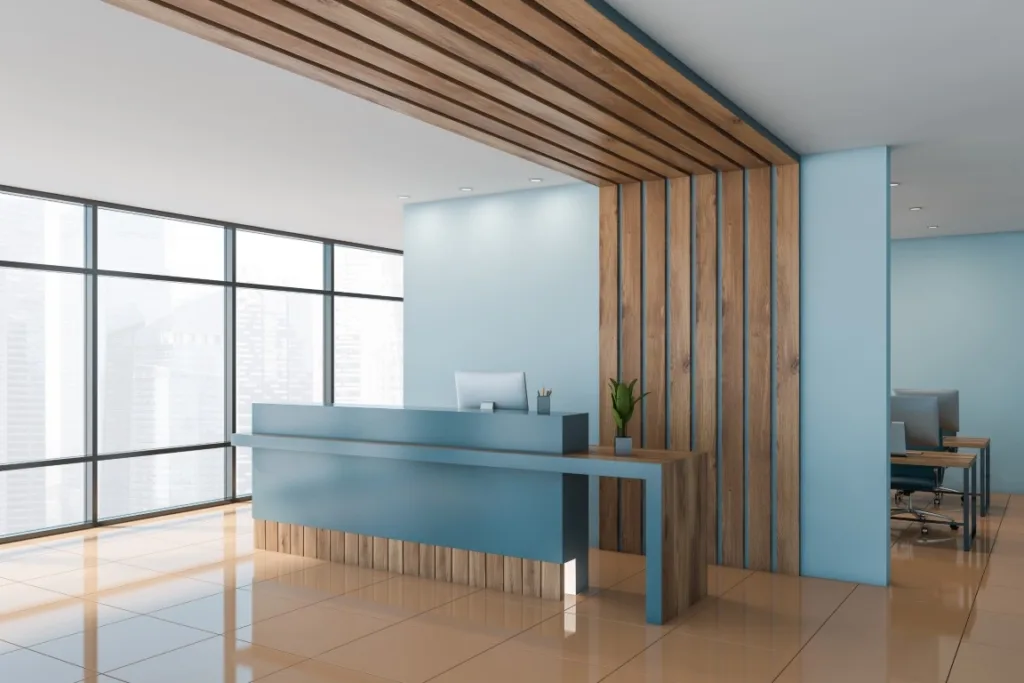
Accent walls are single walls designed to stand out through the use of color, texture, or material. They may utilize bold paint colors, textured finishes, murals, or — in a commercial context — a business’s branding to catch the eye and add some visual interest. When used strategically, they can make commercial spaces stand out, attract customers, and balance creativity with professional design.
At Brush Brothers Commercial, we specialize in enhancing offices, retail stores, healthcare facilities, and other commercial buildings with the power of paint. If you own a commercial space that could use some sprucing up, keep reading to learn more about accent walls and when to use them, along with some ideas to inspire you.
Benefits of Accent Walls in Commercial Spaces
In commercial spaces, accent walls can strengthen brand identity, reinforce company image for clients and visitors, and create memorable first impressions. They’re a simple way to break up monotony in large or plain spaces, add depth and dimension to interior designs, and highlight architectural features.
Furthermore, strategically placing accent walls can help guide foot traffic and differentiate between zones (like waiting areas, workspaces, and departments), improving the space’s functionality.
Plus, interior improvements can go a long way toward boosting employee morale. Adding an accent wall to your commercial space creates a more engaging and inspiring environment for everyone who enters.
When to Use Accent Walls
Here are some places where accent walls can make an especially big impact:
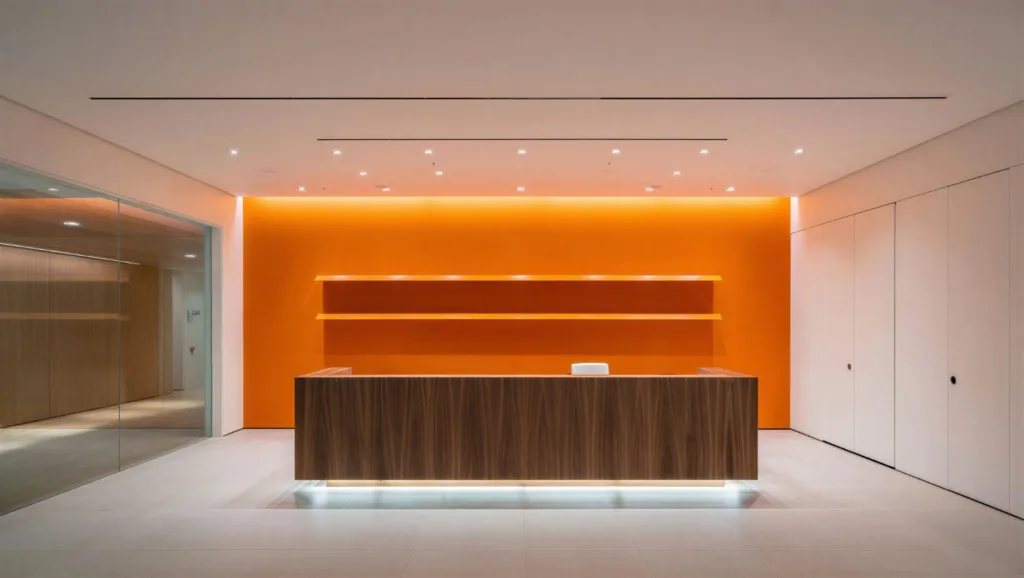
- In high-visibility areas: Use them at reception desks, in entryways, in conference rooms, and to bring attention to focal points in retail stores.
- To highlight architectural features: Add visual interest to feature walls behind shelving or displays or draw attention to unique wall shapes.
- When a space feels flat or oversized: Embrace the power of a pop of color if large walls feel empty or sterile, or if an open-concept space could use some visual interest.
- During rebranding or renovations: If you’re already performing renovations or updating your branding, an accent wall is a cost-effective way to freshen up your building without full repainting.
However, there are some situations where accent walls are not the best idea. If the space is small or already busy, adding additional visual interest may make it too overwhelming. There are also areas where consistency is critical, like certain healthcare or industrial environments, where they aren’t ideal.
How to Choose the Right Accent Wall
Selecting the right wall requires you to consider the natural focal points of a space — typically, accent walls should be the first thing you see when entering. You’ll want a wall with minimal obstructions that doesn’t have too many windows or doors.
Once you’ve selected your wall, choose the color strategically. It should align with your brand palette and contrast with the other walls without overwhelming the space. You should also account for the lighting conditions — natural and artificial light will affect the way the color appears, so make sure you test out a swatch before committing.
Finally, consider different materials and finishes. Matte, satin, and gloss paint all create a different effect, as do textured coatings, wall coverings, and wallpaper. Whatever you choose, just make sure the finish is durable enough to withstand high traffic.
Design Techniques to Consider
An accent wall doesn’t have to be one solid color. Here are some eye-catching design techniques to consider:
- Bold color blocking: Use two or more contrasting colors to create a geometric pattern.
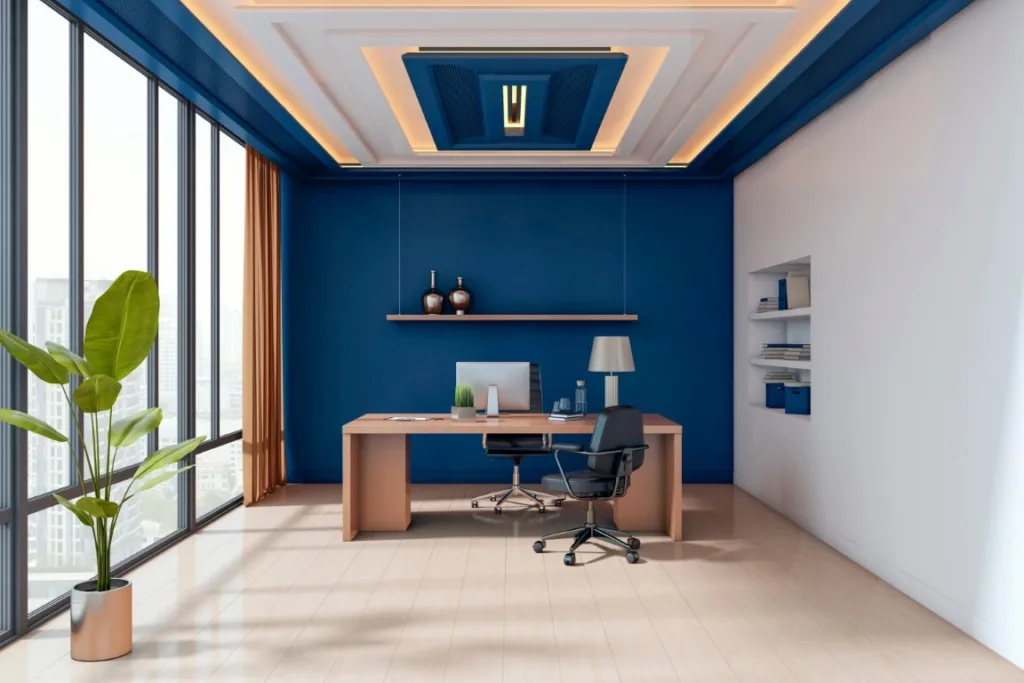
- Subtle contrast: Using two colors within the same family — for example, light blue and dark blue — creates a sophisticated look.
- Textures and materials: Opt for wood paneling, metal, or concrete finishes for additional texture and depth.
- Branding elements: Add logos, slogans, custom graphics, or a mural that reflects your company’s mission or culture.
Common Mistakes to Avoid
Like with any commercial painting project, poor surface preparation can lead to peeling, flaking, or bubbling. It’s important to do the job right the first time — otherwise, you’ll be left to deal with repainting when the coating fails.
Furthermore, remember that an accent wall is supposed to be an accent — don’t overdo it. If every wall has a different color or pattern, it just becomes one big, overwhelming mess.
Additionally, don’t choose overly trendy colors or patterns that will age quickly, ignore the surrounding decor and finishes, or apply your branding inconsistently. Thoughtful planning is key to a successful project.
Accent Walls by Brush Brothers Commercial
If you’re ready to take your commercial space to the next level, contact Brush Brothers Commercial today. We’d be honored to help transform your space, whether with an accent wall or a complete makeover. Give us a call to get started!


